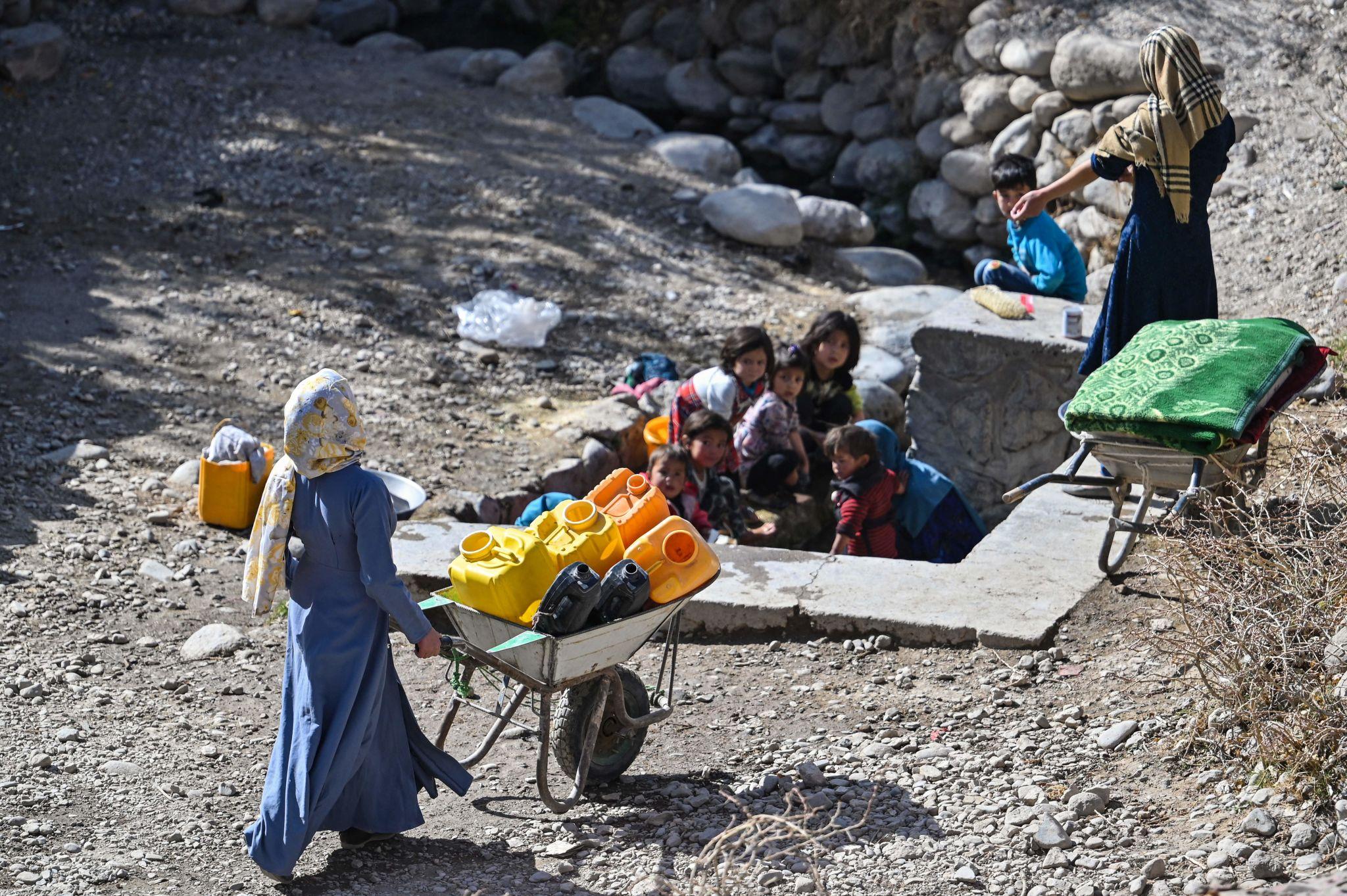
ECOFA works to understand and address the interconnected challenges of water insecurity, climate change, and climate-induced mobility, with particular attention to gender equality and the experiences of women and other marginalized groups.
Through research, community engagement, data collection, and policy advocacy, the project generates evidence and practical insights to strengthen understanding of how water scarcity and climate-related risks affect communities, livelihoods, and patterns of migration and mobility across Afghanistan.
The project places a strong emphasis on ensuring that the voices, experiences, and needs of women and vulnerable groups are reflected in climate, water, and mobility-related policies and programs.
ECOFA conducts structured data collection and assessments to better understand water insecurity and climate-related mobility.
Key areas of assessment include:
The evidence generated helps identify priority needs and informs appropriate responses to water and climate-related challenges.
Community participation is central to the project.
ECOFA engages communities through awareness-raising and dialogue on:
Through community engagement, ECOFA seeks to strengthen local understanding and encourage communities to participate in developing practical and sustainable solutions.
ECOFA analyzes collected data to identify trends, challenges, evidence gaps, and opportunities related to water insecurity, climate change, gender, and human mobility.
Research findings are developed into:
Findings are shared with relevant stakeholders, including government institutions, civil society organizations, NGOs, development partners, and international organizations, to support informed decision-making and stronger climate and water governance.
ECOFA works to translate evidence and research into practical action through policy engagement and stakeholder dialogue.
Activities include:
ECOFA advocates for policies and programs that recognize the different ways climate change and water insecurity affect women, vulnerable households, and marginalized communities.
Through this integrated approach, ECOFA seeks to:
Generate evidence and promote approaches that contribute to more sustainable and inclusive water management.
Ensure the experiences, priorities, and needs of women are reflected in climate, water, and mobility-related decision-making.
Strengthen understanding of climate-related risks and support communities in developing informed responses.
Provide reliable research and data to help policymakers and development partners design more effective interventions.
Increase community awareness and participation in water management, climate adaptation, and mobility-related discussions.
Improve understanding of the drivers and impacts of climate-induced migration and mobility, particularly among vulnerable groups.
ECOFA recognizes that water insecurity, climate change, gender inequality, and human mobility are interconnected challenges.
By combining research and data with community engagement, policy advocacy, and knowledge sharing, ECOFA works to ensure that climate and water-related decisions are informed by evidence and reflect the realities of affected communities.
Our approach aims to contribute to sustainable water management, gender-responsive climate governance, stronger community resilience, and more equitable and inclusive solutions across Afghanistan.